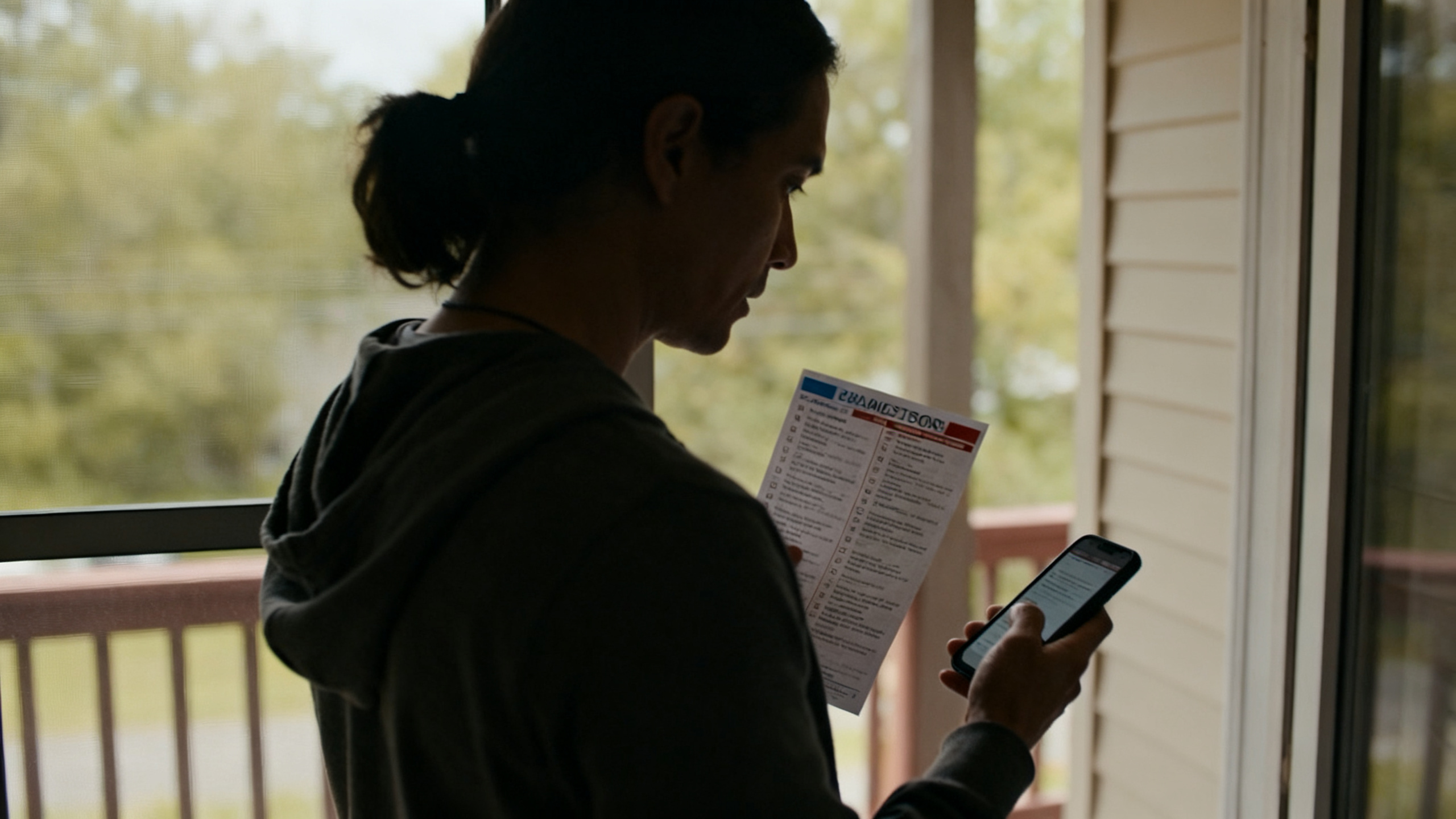
You log into your health plan portal after a routine annual checkup, only to find an Explanation of Benefits (EOB) listing a $180 charge for a blood panel you never agreed to, plus a copay that is double the amount you paid at the time of your visit. Or you get a paper bill in the mail from a specialist you have never seen, for a date you were out of town. These are common signs of potential billing errors or health care fraud, and addressing them quickly can prevent you from paying for services you never received. This resource walks you through clear red flags to watch for, answers common billing questions, and outlines next steps to resolve discrepancies.

Direct answer: How to Spot Suspicious Health-Plan Billing
The most reliable way to identify suspicious health-plan billing is to cross-reference every provider bill and plan EOB against your personal appointment records, official Summary of Benefits and Coverage (SBC), and payment receipts using the following billing red-flag checklist. If you mark one or more items on the list, the billing requires further review before you submit any payment.
Billing Red-Flag Checklist
Mark any item that applies to your current bill or EOB:
□ You are charged for a service, procedure, lab, or supply you did not receive on the date of service listed
□ The provider name, facility name, or date of service on the bill does not match your appointment confirmations or calendar records
□ Your confirmed in-network provider is listed as out-of-network on the EOB, leading to higher cost-sharing than expected
□ The cost-sharing amount (copay, coinsurance, deductible) is higher than the amount listed for that specific service in your official SBC
□ You are billed for a preventive service that your plan is required to cover at 100% with no cost-sharing (confirm eligible services via your carrier’s official documents)
□ You see duplicate charges for the same service, supply, or procedure listed on the same date of service
□ The bill uses vague service descriptions with no corresponding CPT or service code (e.g., “miscellaneous facility fee” with no additional context)
□ You receive a bill for a service that was already marked as fully paid by your plan on a prior EOB for the same date of service
□ The bill requests payment via untraceable methods (gift card, wire transfer, anonymous peer-to-peer payment) for a provider you have never visited
□ The bill arrives more than 12 months after your date of service, outside your state’s standard timely filing limit for health care claims (confirm limits via your state insurance department)
Many billing errors are accidental, caused by typos in patient ID numbers, incorrect CPT code entry, or misclassification of in-network vs. out-of-network status. Even accidental errors can lead to higher out-of-pocket costs, so running every bill through the checklist is a quick way to catch issues early.
Illustrative example: If you visit an in-network dermatologist for a routine preventive skin screening, which your plan covers at 100% with no cost-sharing, and your EOB shows a $40 coinsurance charge for a “medical skin procedure,” you would check two boxes on the checklist: cost-sharing higher than your SBC’s listed amount for preventive care, and a potentially inaccurate charge for a service you did not receive. You can then follow up with the provider’s billing team to confirm if the CPT code was entered incorrectly, and request a corrected claim be sent to your plan.
Common questions: How to Spot Suspicious Health-Plan Billing
What is the difference between a provider bill and an EOB?
An EOB is not a bill. It is a notice from your health plan showing what the provider charged, what the plan negotiated as the allowed amount, what the plan paid, and what you may owe the provider for covered services. You should only pay the amount listed on your final itemized provider bill, after you confirm it matches the patient responsibility line on your most recent EOB for that date of service.
Can an in-network provider bill me for more than the allowed amount my plan negotiated?

In-network providers are contractually prohibited from billing you above the plan’s negotiated allowed amount for covered services, a practice called balance billing. If you receive an in-network bill for more than your listed cost-sharing (copay, coinsurance, deductible) for a covered service, that is a clear red flag. Out-of-network balance billing rules vary by state and plan type, so confirm with your state insurance department if you have questions about out-of-network charges.
Is a “facility fee” ever a legitimate charge?
Some hospital-owned clinics, urgent care centers, and outpatient facilities charge a separate facility fee to cover operational costs, which may be a covered service under your plan. The charge is only suspicious if it is not listed with a corresponding CPT code, or if you were not notified of the fee prior to receiving care. Ask your provider for an itemized breakdown of all fees before receiving non-emergency care when possible.
What if I get a bill for a family member’s service that I don’t recognize?
Cross-reference the date of service with your family’s shared appointment calendar first, then ask the provider for a copy of the signed service acknowledgment form for that date to confirm the service was provided to a member of your plan. If the provider cannot produce proof of service, the charge is likely invalid.
What if I get a bill for a service that was pre-authorized by my plan?
Pre-authorization confirms a service is medically necessary and covered by your plan, but it does not guarantee you will owe $0 for the service. However, if you are billed for more than the cost-sharing amount listed in your pre-authorization notice, that is a red flag that should be addressed with your plan and provider.
Can I be charged for a telehealth visit that I canceled more than 24 hours in advance?
Most providers have a published cancellation policy that outlines if fees apply for late cancellations or no-shows, which are typically not covered by health plans. If you canceled within the provider’s required time frame and still see a charge for the visit, that is a suspicious billing entry.
What this page cannot settle: How to Spot Suspicious Health-Plan Billing
This page is for educational purposes only and cannot resolve specific billing disputes, determine if a specific charge is legally invalid, or adjust your plan’s covered services list. It cannot override your plan’s official Summary of Benefits and Coverage, your state’s insurance billing rules, or your provider’s contract terms. It also cannot help you appeal a denied claim that is legitimately excluded from your plan’s coverage, or waive valid patient responsibility amounts you owe for covered services. If you suspect fraud, this page cannot file a formal complaint on your behalf with state or federal insurance regulators.
Next verification step: How to Spot Suspicious Health-Plan Billing
If you marked one or more items on the billing red-flag checklist, take the following steps to resolve the discrepancy:
First, gather all relevant documents: your EOB, itemized provider bill, SBC, appointment confirmations, and any payment receipts you have for the date of service in question.
Second, contact your provider’s billing department first to share the discrepancy you found. Ask them to reprocess the claim with the correct details, or send a corrected bill if the charge was entered in error. Most accidental billing errors can be resolved directly with the provider’s billing team.
Third, if the provider confirms the charge is correct but it still does not align with your plan’s SBC or pre-authorization terms, contact your health plan’s member services line to ask for a formal claim review. You may be asked to submit written proof of the discrepancy, such as your appointment confirmation or a note from your provider confirming the service provided.
If you believe the billing is fraudulent (e.g., charges for services you never received from a provider you never visited, or requests for payment via untraceable methods), you can file a report with your state’s insurance department and the Federal Trade Commission.
Bottom line: How to Spot Suspicious Health-Plan Billing
Suspicious health plan billing can range from accidental typos to intentional fraud, and catching red flags early can prevent you from overpaying for care you did not receive, or having unpaid bills sent to collections in error. This article and the accompanying checklist are for general educational use only, and do not constitute insurance, tax, legal, or medical advice. Always verify all billing details against your official plan documents, and consult a licensed insurance broker or your state insurance department if you have questions about specific charges or billing disputes.
Important note: This page is educational and is not insurance, tax, legal, or medical advice. Confirm current rules in your plan documents or with a licensed professional.